The Italian Dish I Miss Most

A few weeks ago, I caught a nasty cold that had me housebound for a few days. I’ll admit that I’m a bit of a baby when it comes to being sick, so despite it not being Covid, strep, or the flu, I was (and still am) 99% sure it was worse than any cold I’ve had in recent history.

Over the week of my contagion, I consumed lots of ramen and vegetable broth to soothe my throat and offer my blocked nose a bit of relief. These are classic cold comforts, but as I slurped each noodle, I couldn’t help but crave a different comfort food. One that I hadn’t had in months.

It was my friend and former housemate Sabi who introduced me to tortellini in brodo. During our first semester living in Rome, we cooked together almost every night, exchanging recipes and techniques from our respective countries. She’s Italian, so a lot of my knowledge of Italian food comes from her — including how to make a killer tiramisù. And yet, the dish I’m most thankful to have learned about is tortellini in brodo, or, in English, tortellini in broth.

Tortellini hail from Italy’s central food haven, Emilia-Romagna. The region, which sits just above Tuscany and just below Veneto, is known for some of the country’s best, most archetypal foods, including Prosciutto di Parma, Parmigiano Reggiano, and real-deal balsamic vinegar. Bologna, its capital city, is equally as renowned for its food (and its enchanting porticoes). Think ragù alla Bolognese, mortadella, and, yes, tortellini.

The most traditional tortellini bolognesi are filled with Prosciutto di Parma, Parmigiano Reggiano, pork, mortadella, eggs, and nutmeg. However, you’ll find a variety of fillings, such as spinach & ricotta, in both pastifici (pasta shops), and in the grocery store — which is where my love affair with tortellini in brodo began.

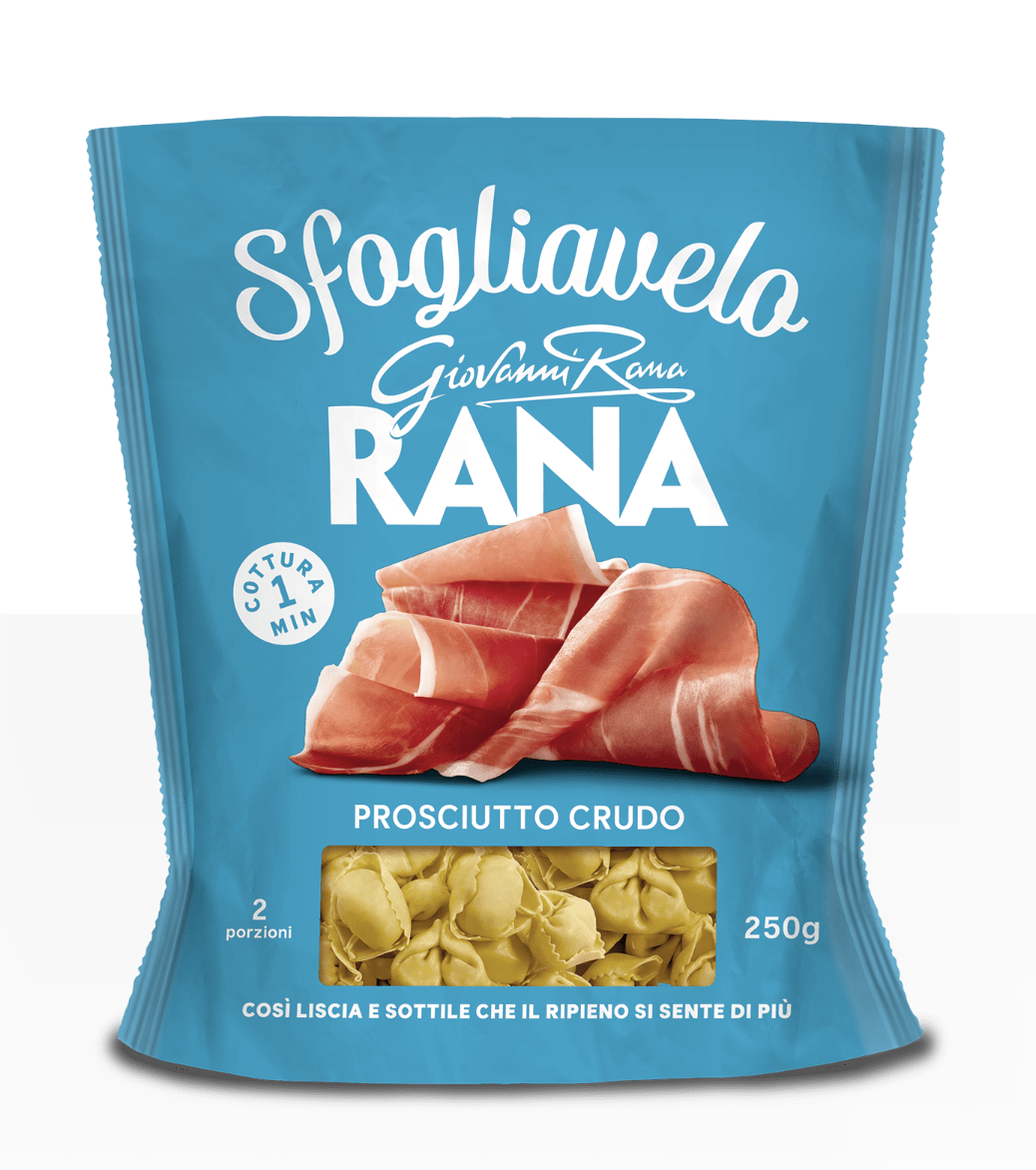
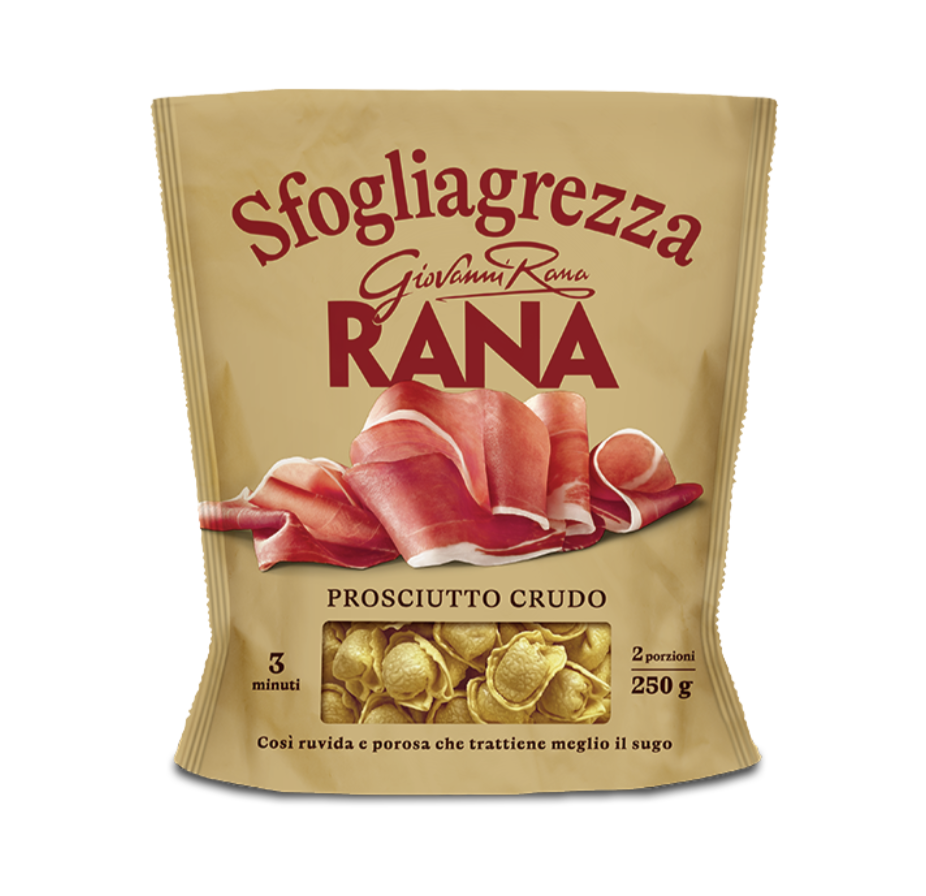
Sometime during my first fall in Rome, I was at the grocery store with Sabi and my other housemate, Martina. We were shopping for the week ahead and were at a standstill in the fresh pasta aisle, eyeing the new array of seasonal Giovanni Rana ravioli. From truffle-filled to basil-tinted, we frequently went for Rana’s ravioli, but that day, we decided to change it up and go with tortellini filled with prosciutto crudo.

Giovanni Rana offers two types: sfogliavelo, which are smaller tortellini made with a thinner dough, and sfogliagrezza, which are a bit bigger and have a tougher dough. We went with the tiny sfogliavelo. They take only a minute to cook, and in my opinion, are far superior.
Sabi immediately knew what we were going to do with them. We would plop a few little broth cubes into boiling water and cook the tortellini in it. Then, we’d serve the tortellini and the broth together, sort of like soup. Tortellini in broth; it couldn’t be simpler.

In brodo is the most traditional way to eat tortellini in Bologna. You can find them served in various cheese, cream, or tomato sauces, but if you’re visiting Bologna and want to try a traditional dish, broth is the way to go. Usually, it’s a simple homemade meat broth, but veggie broth is equally acceptable. Regardless, the tortellini are the star of the show; the broth should be flavorful, but it should never overpower the tortellini themselves.

Later that week, when we finally cooked the tortellini, we each spooned some into our bowls and topped it off with some good old Parmigiano. I let it cool for a minute or so before taking my first bite. And then, as I slurped a little tortellino off the spoon, using my teeth to shave off some of the Parmigiano that had congealed and stuck to the metal, I found my Italian comfort food.
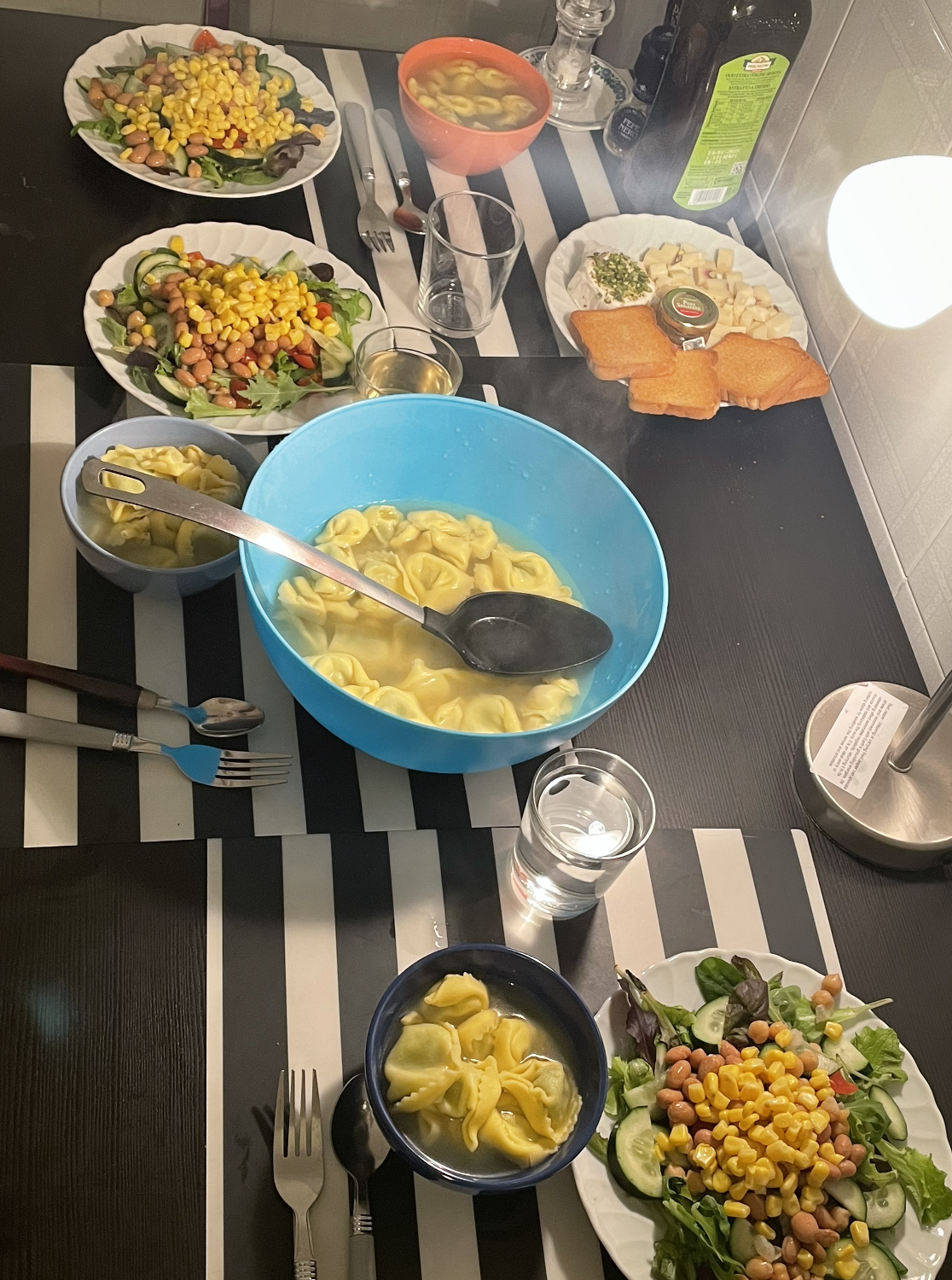
From then on, every time I went to the grocery store, whether it was with my housemates or alone, I found myself grabbing a bag or a little single-serve case of tortellini from the shelf. It quickly became an essential, a food I could prepare during my busiest nights that would never let me down. It gave me much-needed energy during my two week-long battle with mono, and it always felt like a healthier alternative to ramen with a side of scrambled eggs, which was a college staple of mine. No matter how much I ate it, tortellini in brodo never got old.

Sometimes, I’d branch out and try a different variety besides Rana. Doc, my favorite grocery store, always carried a fancy, Bologna-based brand I would occasionally splurge on. Every time I bought them, I could taste the difference in quality, and so, after a year of tortellini-eating, I knew I had to try the real stuff.

But finding tortellini in brodo in Bologna is much harder than you might think — at least it was for us.

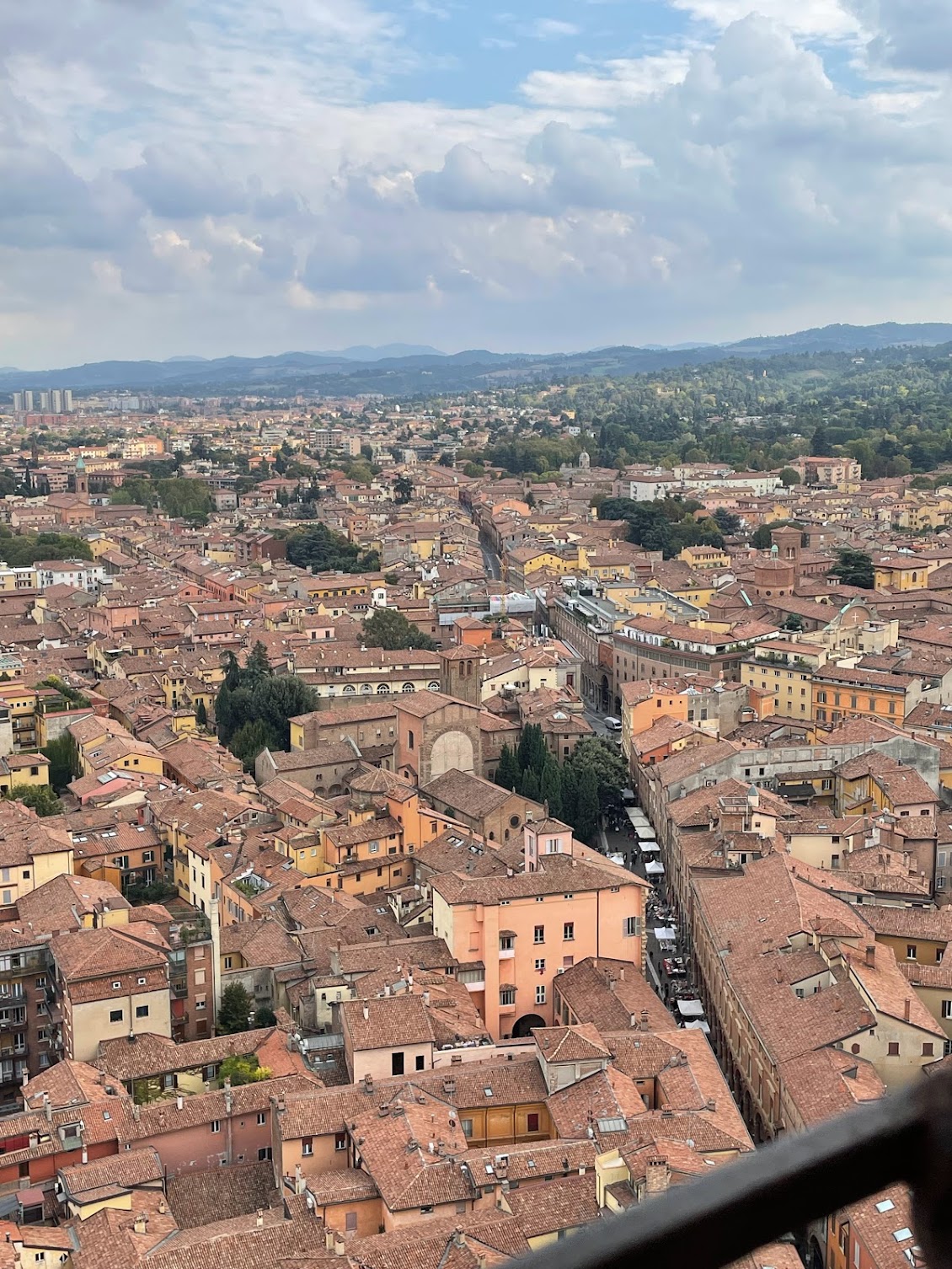
In October of the following year, Sabi and I took a day trip to Bologna. It was a Sunday, and we took an early-morning train from Rome, arriving in the city around 10 a.m. We had nothing planned, besides climbing the Asinelli tower and finding a restaurant where I could eat tortellini in brodo and she could eat tagliatelle al ragù.
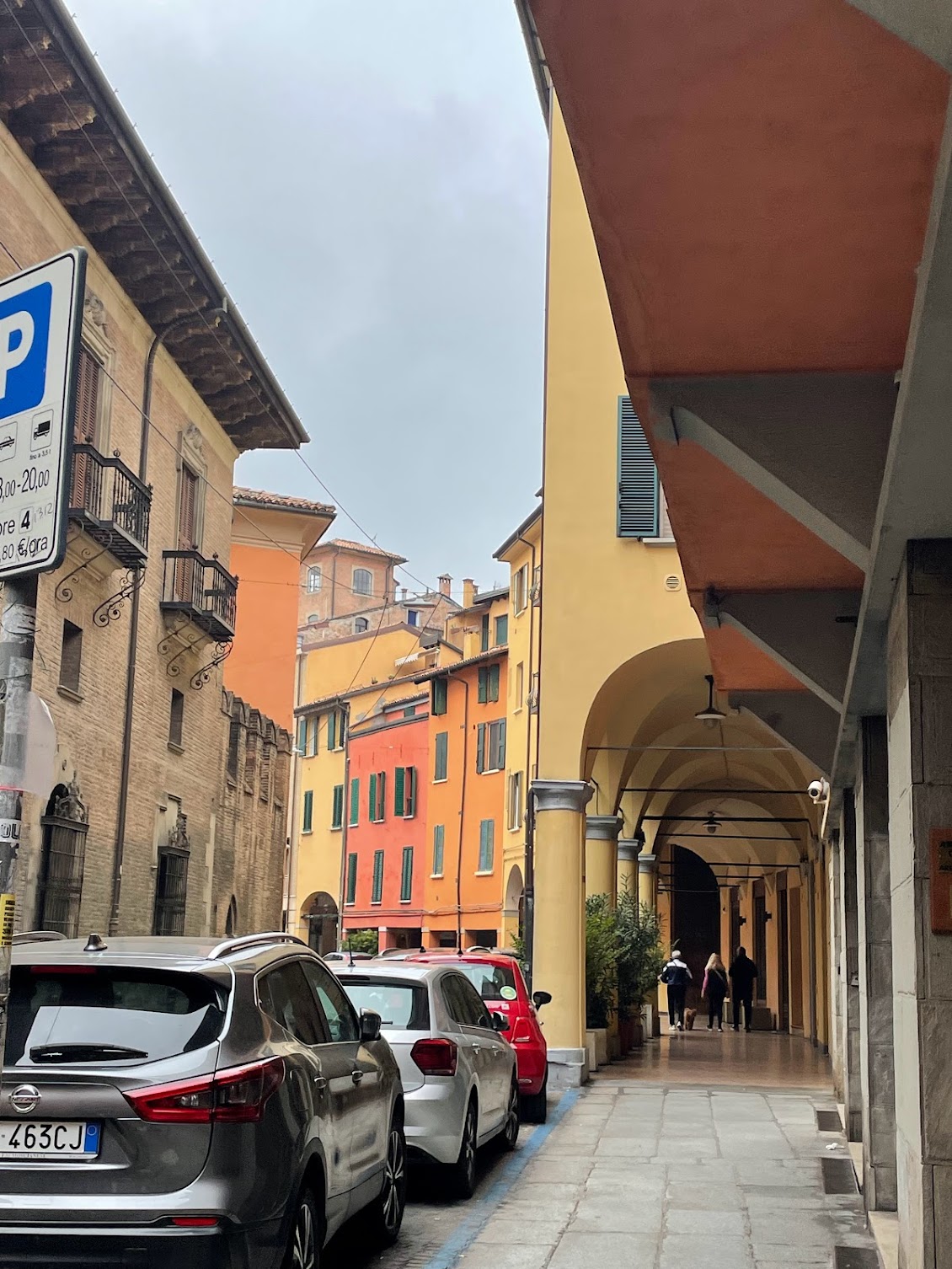
But it was a Sunday, and in Italy, everybody and their mother goes out for lunch on Sunday. So by the time all the trattorie opened up at noon, we found it pretty much impossible to find one that had an empty table.

We frantically searched on Google Maps to find somewhere, anywhere, that looked decent and had the two dishes we were looking for. Each time we found one, though, we arrived to find that there was no space. “Mi dispiace, ragazze!” over and over. We were stressed, but it’s impossible to be too stressed in a city as beautiful as Bologna; as we speed-walked past each pumpkin-colored building, we basked in its charm, our stomachs growing louder by the minute.

Around 2:30, when many of the restaurants were closing up shop, we found a trattoria that was open a little later than most. I didn’t even take note of the name or where, exactly, it was. All that mattered was that they had a table for us. I was too excited to try my beloved comfort food in the city of its origin.
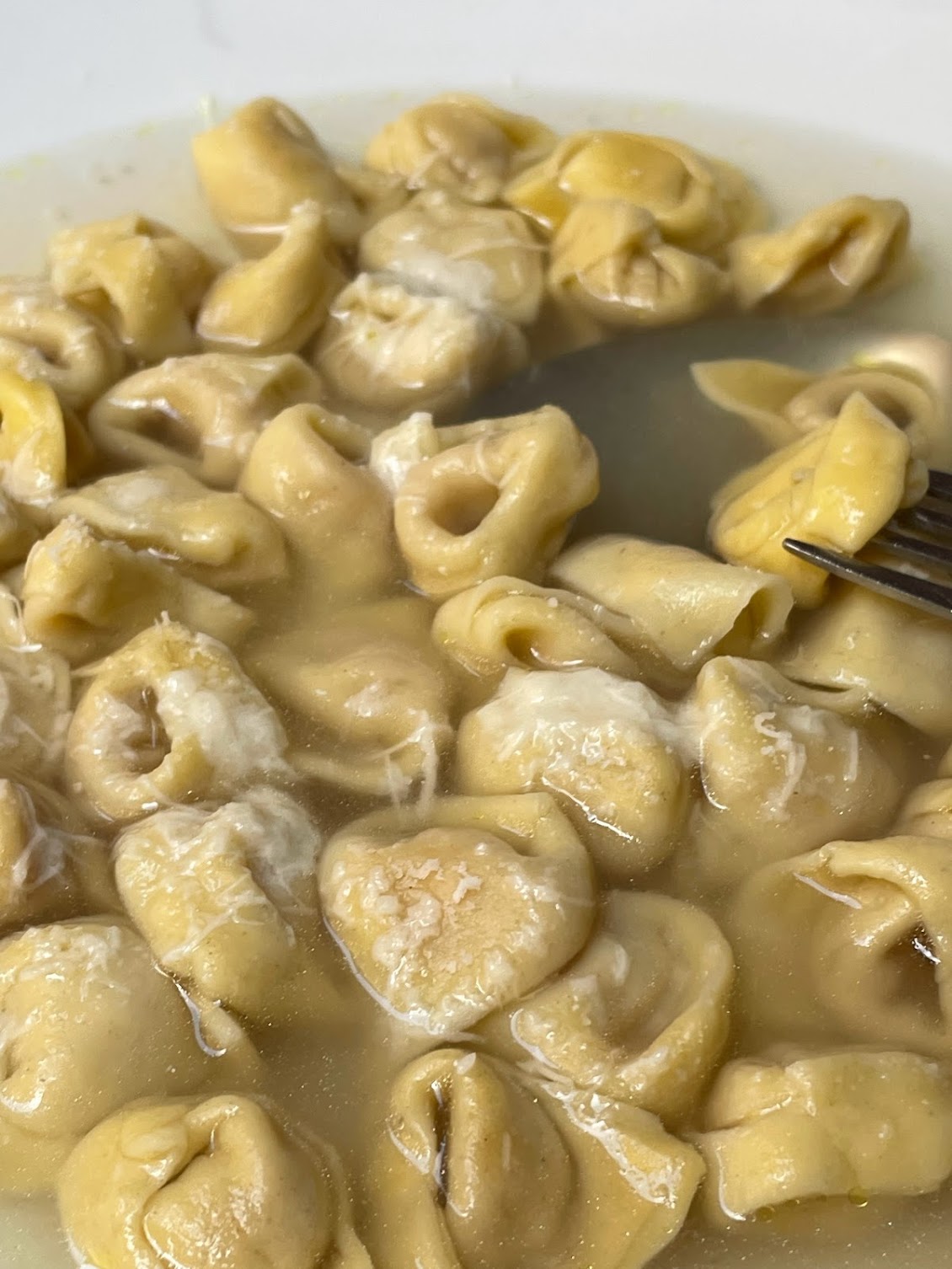
And it was perfect.


A fig crostata

A recount of my experience making a crostata con confettura di fichi from Giallo Zafferano, written in September 2023.

Peeling an overripe fig is like peeling an orange that’s given up on life. The second you think you’ve removed all of its dark purple skin, the thing deflates like a damn balloon, exploding in slow motion into your fingers, releasing its small seeds underneath your nails, and leaving your hands sticky and slimy. Figs were never meant to be peeled, I think, as another one combusts before me. But alas, for a crostata filled with fig jam, one must peel figs.

My first introduction to fresh figs, or fichi in Italian, was here in Rome. During my first few months in Italy, I simply couldn’t escape them — much like the incessant heat. They caught my eye at every farmers’ market I visited because I’d never seen them before. In America, the closest I’d ever gotten to a fig was via Fig Newton, those soft biscuits filled with a fig paste, wrapped in crinkly yellow packaging. They were often served as a healthy snack to me as a kid, over an Oreo or a Chips Ahoy cookie. But I never resented them; sometimes, I even preferred them. I found them so sweet and buttery, and I’d eat them like I’d eat Kit Kat bars: peeling off the top layer first with my front teeth, leaving the skeletal remains for last.

I never considered what a real, fresh fig tasted like until I noticed them that first September, during their peak, while on a walk with my half-Sicilian roommate. We passed by a fruit stand on our street, and there they were, sitting in a plastic box. She compared them to the ones she used to have back in Sicily, letting me know that these weren’t as impressive. But still, she insisted that we buy them so that I could give them a try — and we did.  

It’s been two years now since I tasted my first fig, and upon my end-of-summer return to Rome, I’ve been, once again, unable to avoid them. On a morning visit to the market in Piazza San Cosimato, I couldn’t resist buying a box of them at my favorite stand, along with a rainbow of other various produce items. I chose the green ones this time; they aren’t different in shape or texture, and, while still plenty sweet, I find their sweetness to be more subtle and earthy than dark figs.

I had plans to bake with this particular box, but, three days after buying it, I found myself figless. I’d eaten them all: in yogurt, with a little bit of honey, or on their own. I’d grab one from the fridge each time I entered the kitchen, tear it open with my thumbs, and devour the pink, seedy sweetness within. There’s nothing like a cold, fresh fig to soothe a sweet tooth. A Fig Newton simply can’t compare. But perhaps, I thought, a fig-filled crostata could.

The crostata is the Italian version of a pie. The main difference in flavor is the crust: the crostata is made with shortcrust pastry, or pasta frolla, which is made with double the amount of flour than butter and takes two egg yolks, which give it its signature yellowish tint. The result is something crumblier and more biscuit-like than a pie crust, a texture that effortlessly complements a jammy filling, and one quite reminiscent of the Newton. 

Since I’d run out of figs, I ran to my neighborhood’s fruit stand to buy a second box of them before baking my crostata: this time, I decided on dark ones. I peeled 600 grams of figs — a task which I will never do again, if I can help it — and I placed the gut-like substance into a pot on the stove with a cup of water. It quickly came to a boil. I added the juice of a lemon for acidity, 300 grams of sugar to thicken, and a teaspoon of vanilla, because Giallo Zafferano said so. I watched it simmer on the stove as my face grew damp with sweat. I remembered why I don’t bake during the summer.

I dug my meat thermometer out of the cabinet and took the jam’s temperature. My hand felt as if it was beginning to melt as I held it over the stove and watched the numbers slowly rise. 98, 99, 100. Eventually, it hit 104 degrees, so I removed it from the heat, pouring it into a ceramic bowl to cool. 

I gathered ingredients to make the dough, a task I always prefer to do by hand but always regret later on. I measured out 250 grams of 00 flour and added a pinch of salt, quickly mixing the two together, and then came the butter. The key to a good pastry dough is icy cold butter, and while mine had been sitting in the fridge for hours, all hope was lost the second that I took it out. As I cut it into 125 grams worth of cubes, my hands began to melt it. The table slowly grew darker as the buttery mess seeped into it.

I continued to massage the butter into the mix of flour and salt for a few minutes, and eventually, it resembled sand, but it was not yet uniform. I whisked clumpy powdered sugar into the dough and created a well to add the egg yolks, and slowly but surely, it started to feel like a dough. I transported it from bowl to table, kneaded it for a few minutes, and shaped it into a rectangle before covering it in plastic and placing it in the fridge to cool.

Thirty minutes later, I pulled the dough out from the fridge. It felt firm from outside the plastic, but once I removed it, a slight layer of melted butter immediately coated my hands. Flouring the table, I ignored the inevitable fate of a dough that simply wouldn’t stay together. 

After two attempts and a visit to the freezer, I gave up. Instead of rolling out the dough, I placed it into the tart pan and smoothed it out myself. I used the heel of my hand to remove any irregular thickness along the edges, feeling the dough get wetter with each touch. There was no hope in a top layer, I thought, and I was right: each time I cut a long strip of dough with the leftovers to create the rustic lattice look, it would crack, break, give up — just like the peeled figs.

I decided to go with an open-faced fig crostata, or rather, I was essentially forced to go with an open-faced fig crostata. I placed the tart pan in the oven, finished my dishes, and sat at the kitchen table with a stiff back in a puddle of sweat while I waited for it to bake. Once the crust showed signs of browning, I removed it from the oven and placed it on the counter. I left the kitchen immediately and took a cold shower, retiring to my bedroom for the night and refusing to enter the kitchen again. 

In the morning, upon returning, I admired its look as it sat on the counter next to a slowly-approaching beam of light. It looked more like a pie than a crostata, but it almost resembled the inner anatomy of a fig itself. The shortcrust pastry, almost like the fig’s outer pith layer, was round and slightly asymmetrical in parts. And the fig jam, almost like the flesh of the pink, pollinated center, was filled with seeds, trapped amidst a membrane of sugar. 

I tasted it. Floral, with hints of lemon and butter. I wished there was a top layer of crust, but I couldn’t complain. The dough may not thrive in heat, but figs certainly do.