
A few weeks ago, I caught a nasty cold that had me housebound for a few days. I’ll admit that I’m a bit of a baby when it comes to being sick, so despite it not being Covid, strep, or the flu, I was (and still am) 99% sure it was worse than any cold I’ve had in recent history.
Over the week of my contagion, I consumed lots of ramen and vegetable broth to soothe my throat and offer my blocked nose a bit of relief. These are classic cold comforts, but as I slurped each noodle, I couldn’t help but crave a different comfort food. One that I hadn’t had in months.
It was my friend and former housemate Sabi who introduced me to tortellini in brodo. During our first semester living in Rome, we cooked together almost every night, exchanging recipes and techniques from our respective countries. She’s Italian, so a lot of my knowledge of Italian food comes from her — including how to make a killer tiramisù. And yet, the dish I’m most thankful to have learned about is tortellini in brodo, or, in English, tortellini in broth.
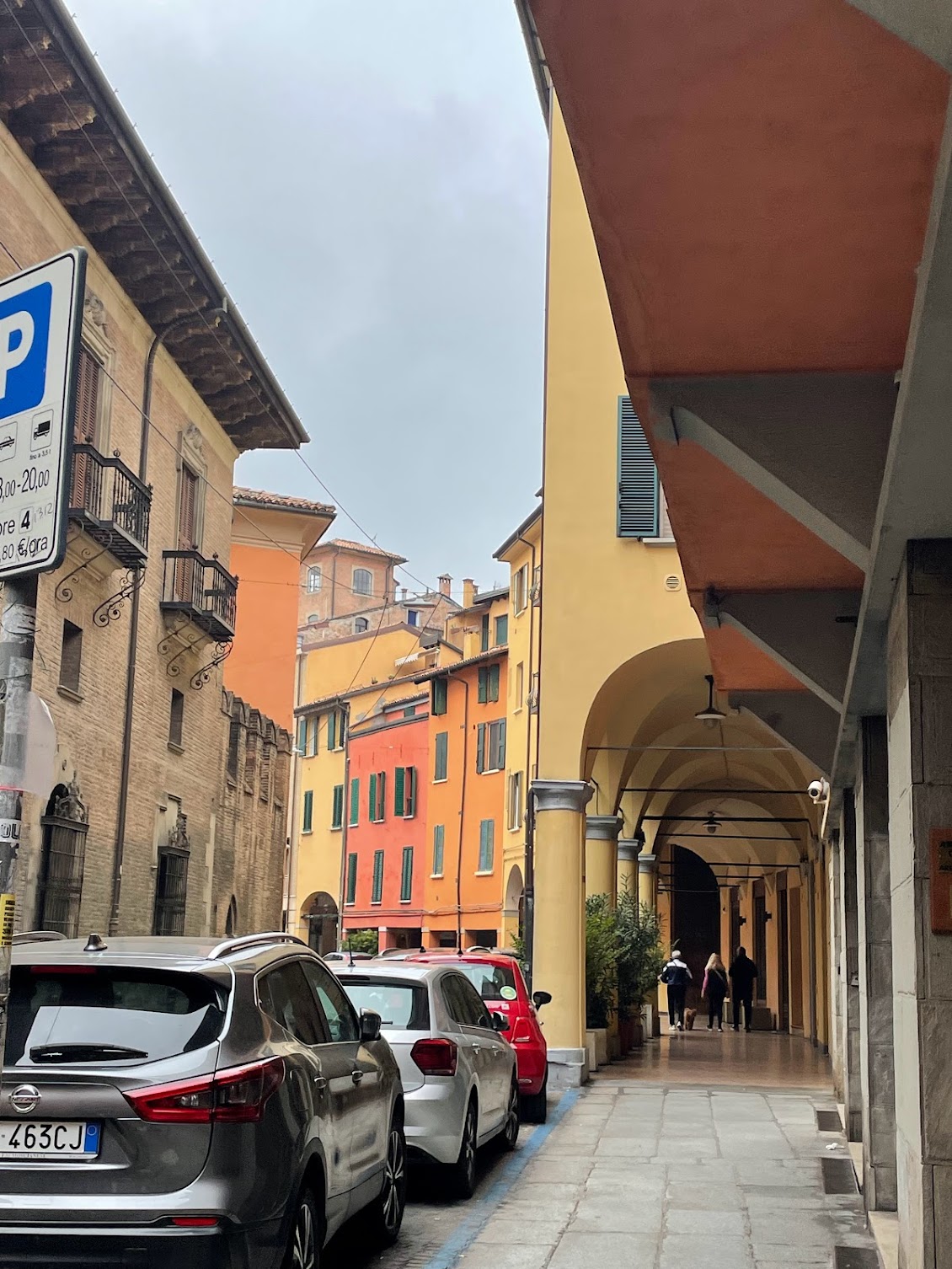
Tortellini hail from Italy’s central food haven, Emilia-Romagna. The region, which sits just above Tuscany and just below Veneto, is known for some of the country’s best, most archetypal foods, including Prosciutto di Parma, Parmigiano Reggiano, and real-deal balsamic vinegar. Bologna, its capital city, is equally as renowned for its food (and its enchanting porticoes). Think ragù alla Bolognese, mortadella, and, yes, tortellini.
The most traditional tortellini bolognesi are filled with Prosciutto di Parma, Parmigiano Reggiano, pork, mortadella, eggs, and nutmeg. However, you’ll find a variety of fillings, such as spinach & ricotta, in both pastifici (pasta shops), and in the grocery store — which is where my love affair with tortellini in brodo began.
Sometime during my first fall in Rome, I was at the grocery store with Sabi and my other housemate, Martina. We were shopping for the week ahead and were at a standstill in the fresh pasta aisle, eyeing the new array of seasonal Giovanni Rana ravioli. From truffle-filled to basil-tinted, we frequently went for Rana’s ravioli, but that day, we decided to change it up and go with tortellini filled with prosciutto crudo.
Giovanni Rana offers two types: sfogliavelo, which are smaller tortellini made with a thinner dough, and sfogliagrezza, which are a bit bigger and have a tougher dough. We went with the tiny sfogliavelo. They take only a minute to cook, and in my opinion, are far superior.
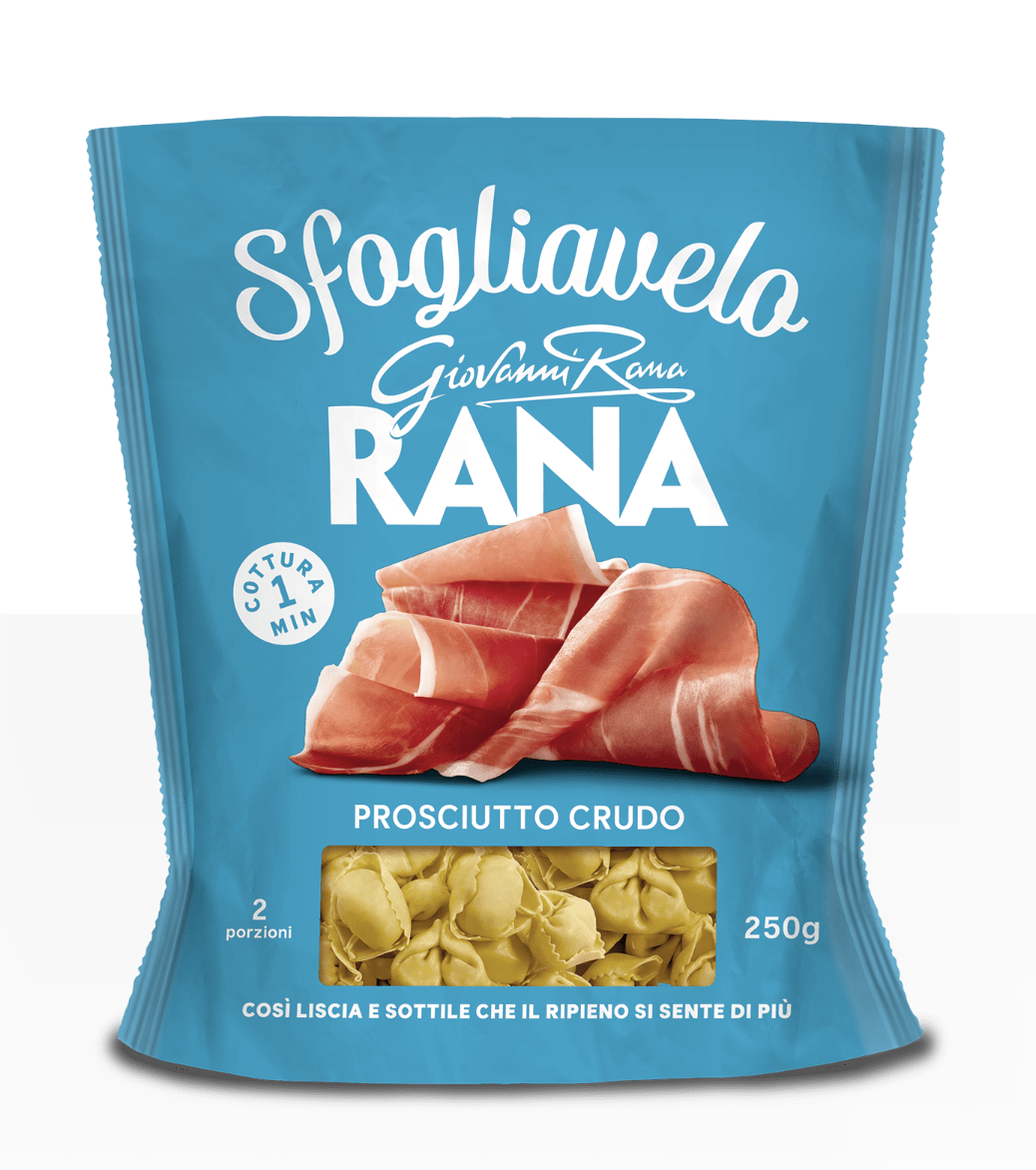
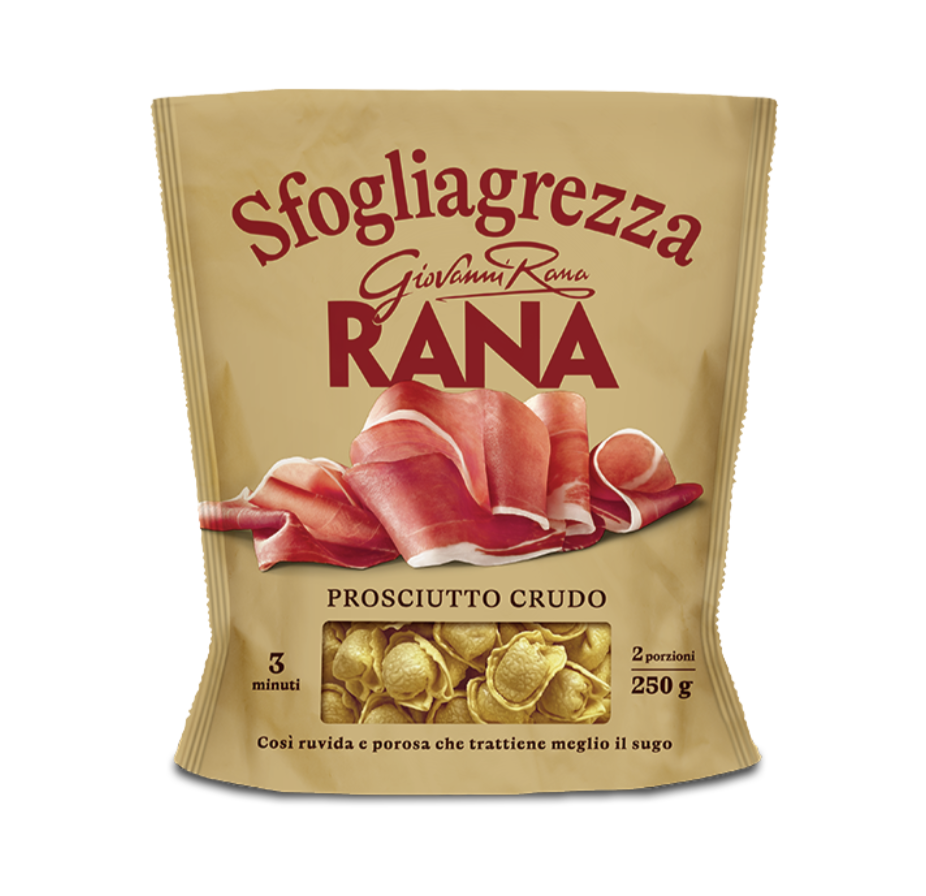
Sabi immediately knew what we were going to do with them. We would plop a few little broth cubes into boiling water and cook the tortellini in it. Then, we’d serve the tortellini and the broth together, sort of like soup. Tortellini in broth; it couldn’t be simpler.
In brodo is the most traditional way to eat tortellini in Bologna. You can find them served in various cheese, cream, or tomato sauces, but if you’re visiting Bologna and want to try a traditional dish, broth is the way to go. Usually, it’s a simple homemade meat broth, but veggie broth is equally acceptable. Regardless, the tortellini are the star of the show; the broth should be flavorful, but it should never overpower the tortellini themselves.
Later that week, when we finally cooked the tortellini, we each spooned some into our bowls and topped it off with some good old Parmigiano. I let it cool for a minute or so before taking my first bite. And then, as I slurped a little tortellino off the spoon, using my teeth to shave off some of the Parmigiano that had congealed and stuck to the metal, I found my Italian comfort food.
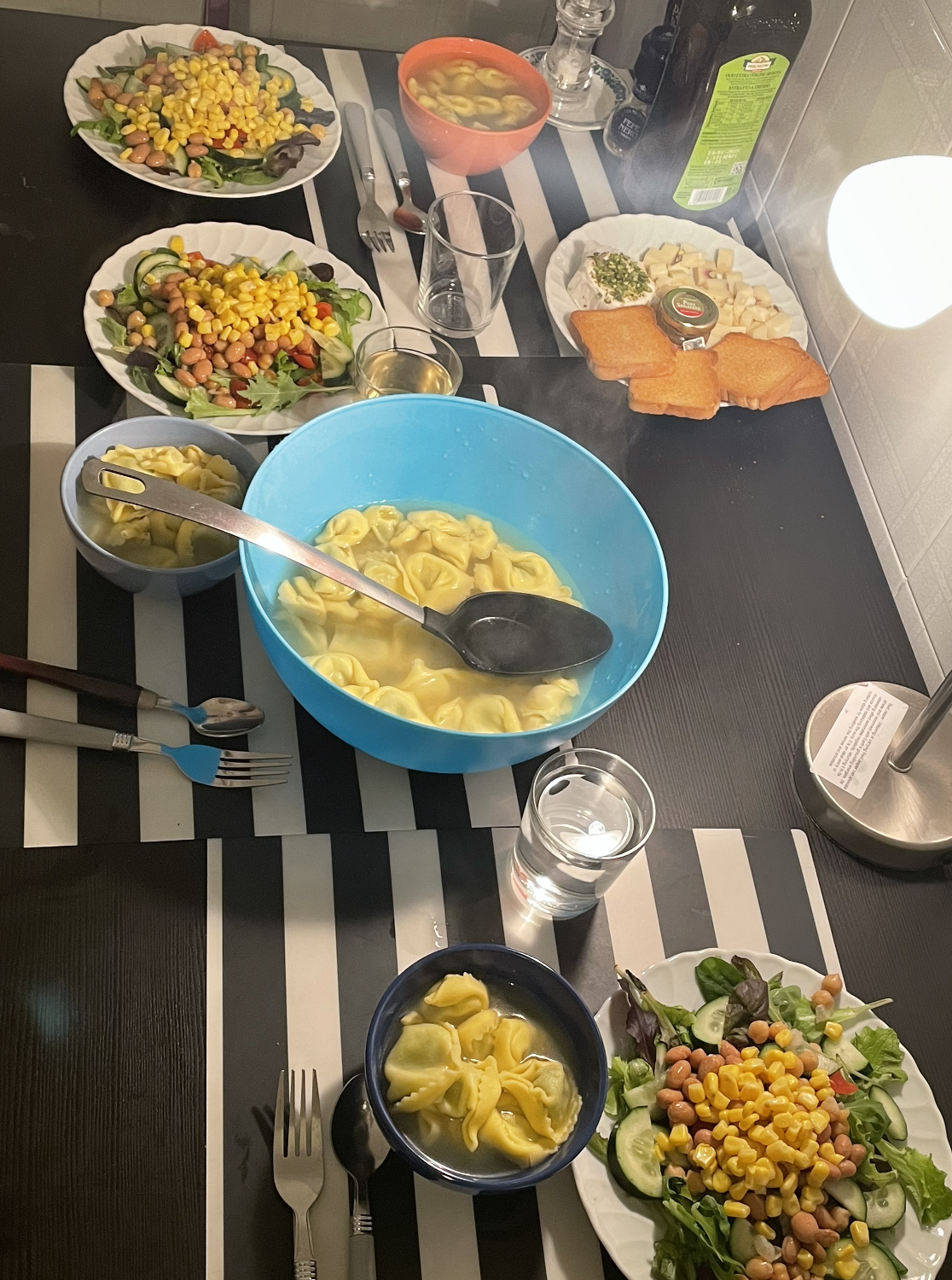
From then on, every time I went to the grocery store, whether it was with my housemates or alone, I found myself grabbing a bag or a little single-serve case of tortellini from the shelf. It quickly became an essential, a food I could prepare during my busiest nights that would never let me down. It gave me much-needed energy during my two week-long battle with mono, and it always felt like a healthier alternative to ramen with a side of scrambled eggs, which was a college staple of mine. No matter how much I ate it, tortellini in brodo never got old.
Sometimes, I’d branch out and try a different variety besides Rana. Doc, my favorite grocery store, always carried a fancy, Bologna-based brand I would occasionally splurge on. Every time I bought them, I could taste the difference in quality, and so, after a year of tortellini-eating, I knew I had to try the real stuff.
But finding tortellini in brodo in Bologna is much harder than you might think — at least it was for us.
In October of the following year, Sabi and I took a day trip to Bologna. It was a Sunday, and we took an early-morning train from Rome, arriving in the city around 10 a.m. We had nothing planned, besides climbing the Asinelli tower and finding a restaurant where I could eat tortellini in brodo and she could eat tagliatelle al ragù.

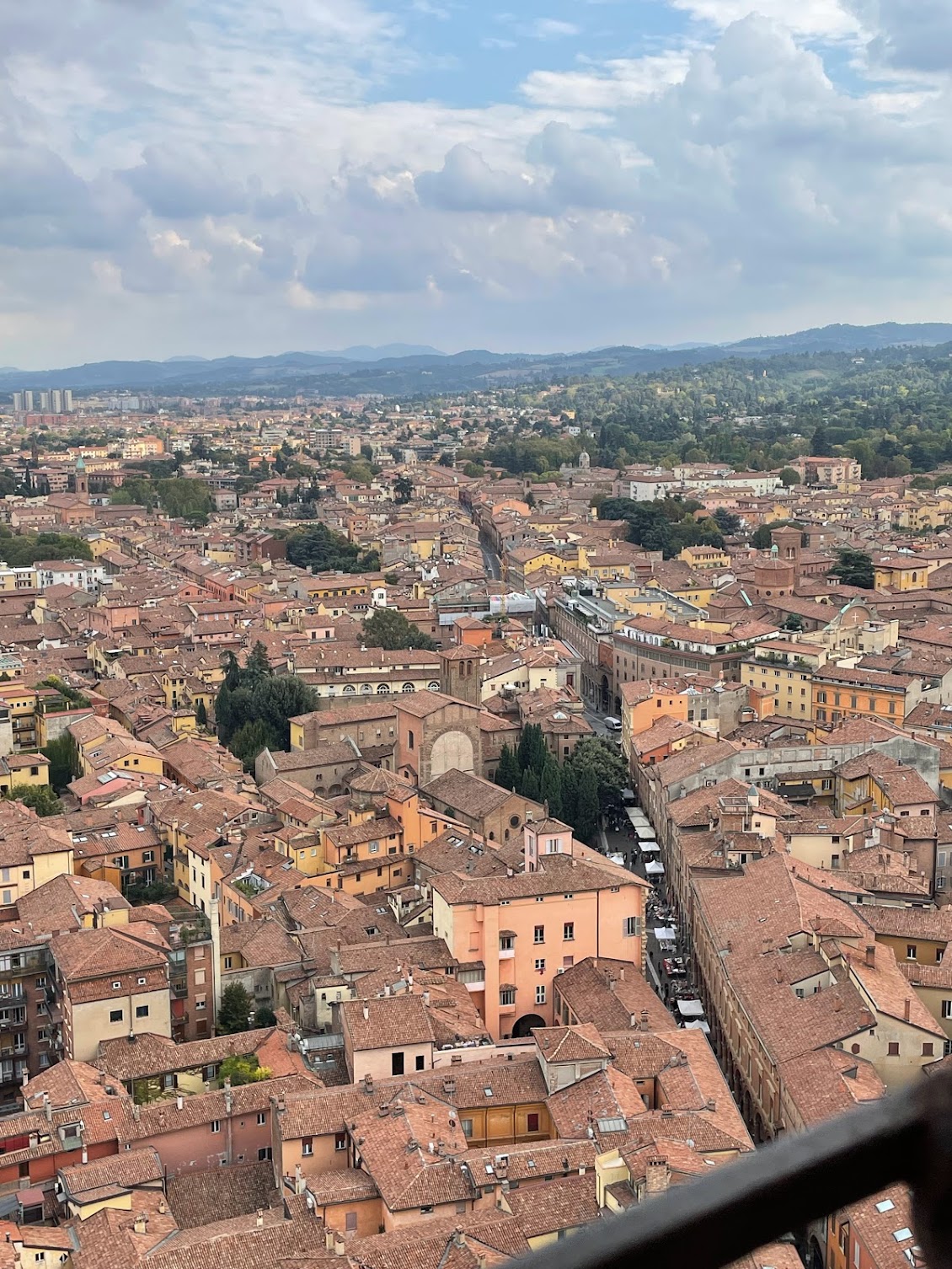
But it was a Sunday, and in Italy, everybody and their mother goes out for lunch on Sunday. So by the time all the trattorie opened up at noon, we found it pretty much impossible to find one that had an empty table.
We frantically searched on Google Maps to find somewhere, anywhere, that looked decent and had the two dishes we were looking for. Each time we found one, though, we arrived to find that there was no space. “Mi dispiace, ragazze!” over and over. We were stressed, but it’s impossible to be too stressed in a city as beautiful as Bologna; as we speed-walked past each pumpkin-colored building, we basked in its charm, our stomachs growing louder by the minute.
Around 2:30, when many of the restaurants were closing up shop, we found a trattoria that was open a little later than most. I didn’t even take note of the name or where, exactly, it was. All that mattered was that they had a table for us. I was too excited to try my beloved comfort food in the city of its origin.
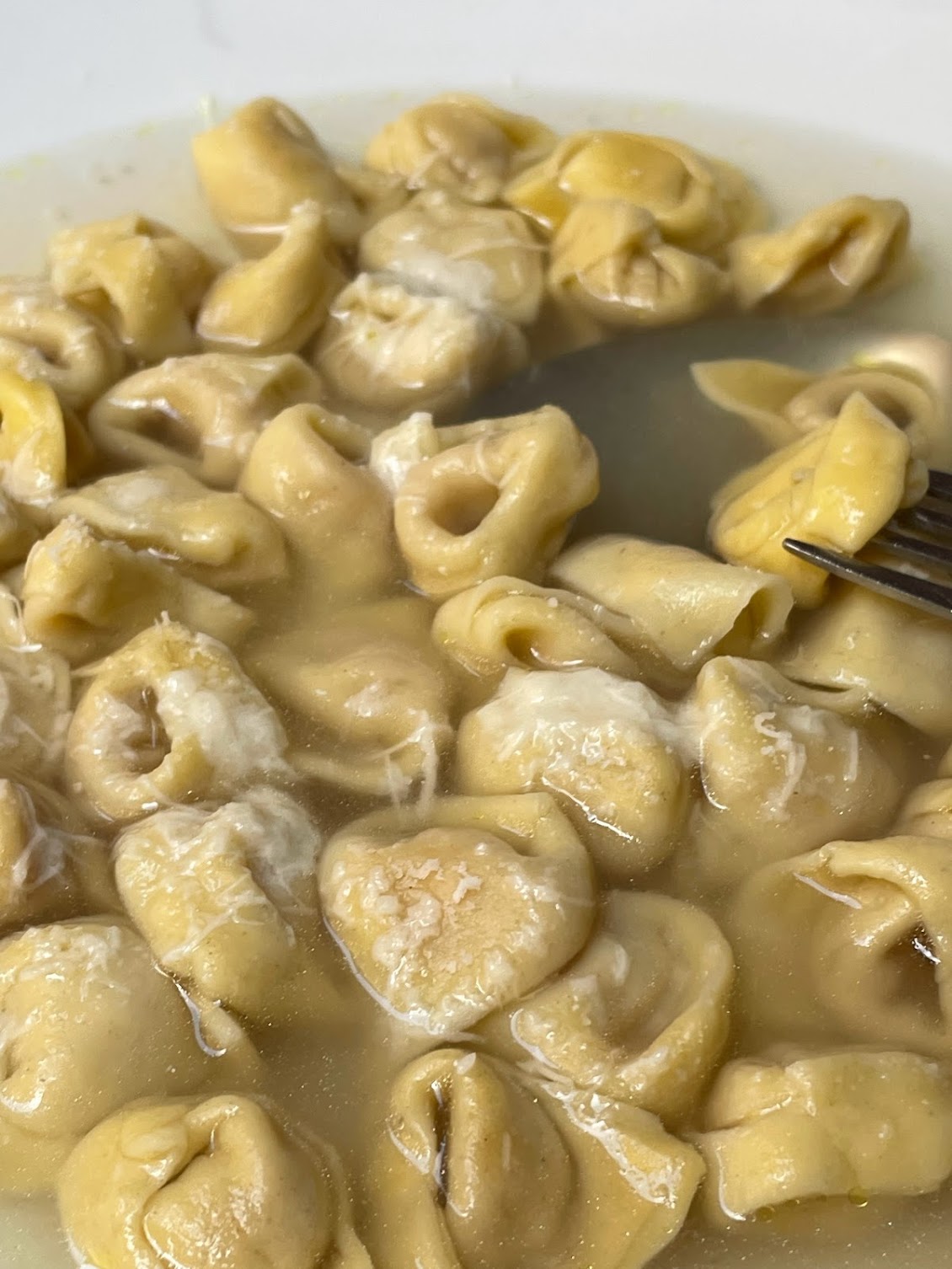
And it was perfect.
 Studio Josie